Research
With a clear vision of final practical applications and solutions to social issues, the Yanai Laboratory is working to create functions based on the development of original materials to achieve these goals. We are mainly working on the following three topics, with “molecules” and “light” as common keywords. We aim to create unprecedented interdesciplinary research through the fusion of each theme, and to make discoveries that only we can make.
Opening up the interdesciplinary
area of molecules and quantum
High sensitivity NMR and MRI using
molecules and light

Effective use of light energy by the
power of molecules
Quantum sensing and control
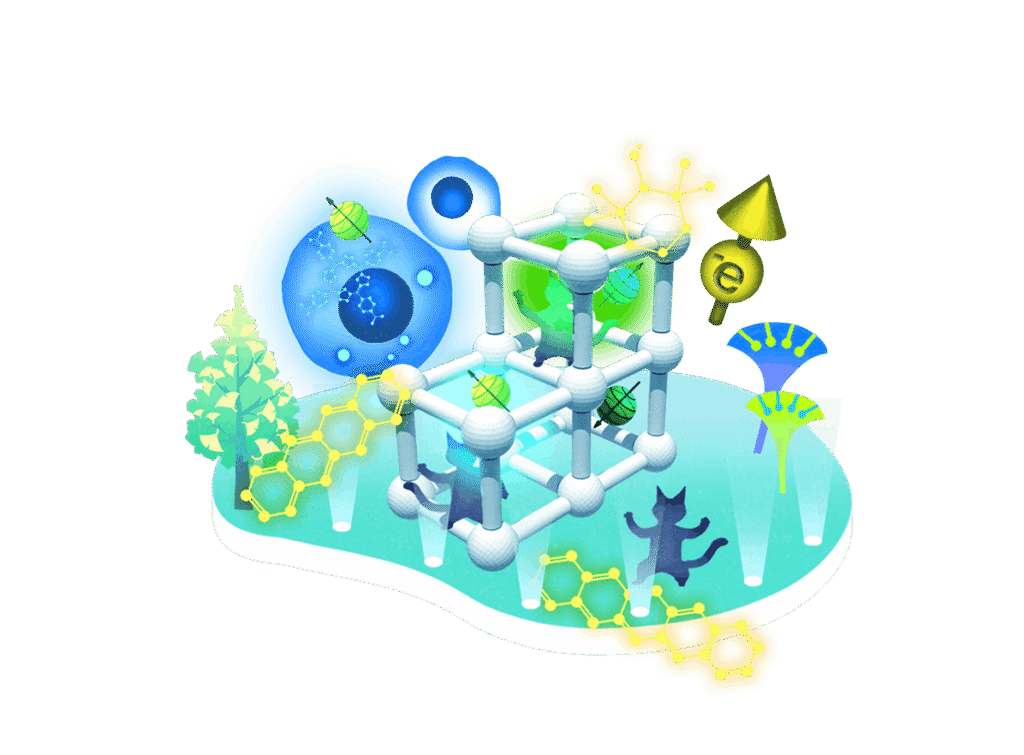
We are currently in the midst of the second quantum revolution. Quantum computers, quantum communications, and quantum sensing are being active topics. We would like to find our own answer to the question, “What role should chemistry play in the quantum age?”
We find a hint of the answer in the interface between quantum and life. Many quantum phenomena function only in a clean and dry environment, while life phenomena are in a wet and mixed environment. It is expected that quantum technology can be applied to life phenomena to understand and control them with unprecedented precision, but this is not an easy task. This is where chemistry can contribute. We believe that it is possible to give molecules the desired quantum properties through the power of chemistry and use them to understand and control life phenomena, in other words, to connect quantum and life through chemistry. We hope that this will create a new field of activity for chemistry, and a new area of chemistry will be born. We call this new interdisciplinary field as “Quantum-Bio-Chemistry”.

1. Molecular Quantum Nanosensor (MoQN)
When Prof. Nobuhiro Yanai read the paper by the Sam Bayliss group and the Ashok Ajoy group reporting room-temperature optically detected magnetic resonance (ODMR) in pentacene-doped para-terphenyl crystals, he immediately got the idea that “if we make nanocrystals of this, we can demonstrate quantum sensing inside cells using molecules for the first time.” This was because our group had already developed nanocrystals of this material for a different purpose (triplet-DNP) in our previous research (First paper in PCCP; Second paper in JACS). He proposed this idea to Dr. Hitoshi Ishiwata, an expert in quantum sensing using NV centers in diamonds, and our collaboration team has demostrated the concept of MoQN for quantum sensing in living cells. While many molecular qubits have been developed to date, there had been no examples demonstrating their sensing ability within living cells. This required materials science expertise—specifically, the ability to reduce the material to the nanoscale and ensure biocompatibility—and because we possessed these capabilities, we were able to overcome this major hurdle.
This research demonstrates that the molecular characteristics of “controllability” and “uniformity” offer significant advantages for quantum sensing.
Since pentacene possesses multiple hydrogen atoms, the ODMR spectrum becomes complex due to hyperfine interactions with electron spins. However, we were able to resolve this issue by deuterating the pentacene, effectively leveraging the molecule’s high tunability.
Conventional nanodiamonds, which have been primarily used for intracellular quantum sensing, exhibit structural inhomogeneity, leading to variations in ODMR peak positions and making it difficult to measure temperature accurately within cells. In contrast, MoQN has a more uniform structure, resulting in minimal variation in ODMR peak positions, which made it possible for the first time to measure absolute temperature in living cells.
The appeal of molecules lies in their diversity, and it is expected that by modifying their structures in various ways, superior MoQNs will be developed, leading to quantum technologies that contribute to the elucidation of biological phenomena and the diagnosis of diseases.

【Reent examples】
MoQN functioning in living cells:Science Adv. 2026, 12, eaeb5422.
2. Quantum Nose Concept: MOF × Molecular Qubit = Chemical Quantum Sensing
Molecular qubits have the advantage of small size and precise structural control. Efforts to realize quantum sensing using molecular qubits are in their infancy. We have proposed the incorporation of molecular qubits into MOFs with nanopores, where quantum coherence can respond to chemical stimuli. By combining various MOFs and qubits, we aim to realize “Quantum Nose” sensing of specific chemical species with ultra-high sensitivity.

【Reent examples】
Room-temperature observation of quintet quantum coherence:Science Adv., 2024, 10, eadi3147.
Quantum coherence of triplet responsive to chemical stimuli:Nature Commun., 2024, 15, 7622.
Light-harvesting spin polarization:J. Am. Chem. Soc. 2025, 147, 4365–4374.
Radicals with extremely long relaxation times:J. Am. Chem. Soc., 2023, 145, 27650–27656.
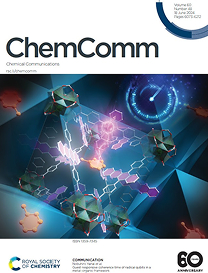
Radical quantum coherence responsive to chemical stimuli:Chem. Commun., 2024, 60, 6130-6133.
3. Development of Novel Qubits
We use singlet fission as a way to impart quantum properties to molecules. Singlet fission is a phenomenon in which a singlet exciton splits into two triplet excitons, and is the reverse process of photon upconversion using TTA. Since two excitons (electrons) can be extracted from a single photon, it is expected to dramatically improve the efficiency of solar cells and is being actively studied worldwide.
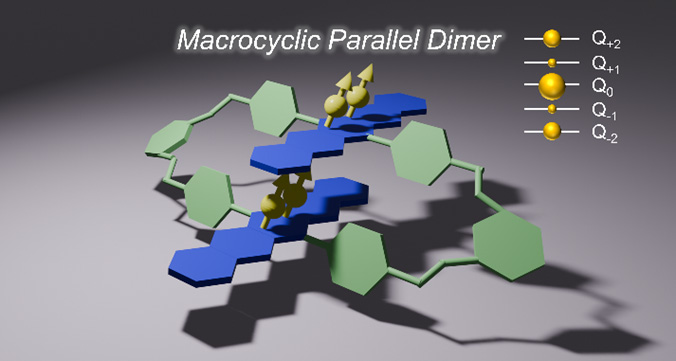
We have focused on singlet fission as a unique method to generate a multiply excited state called a quintet, in which two excited triplets are strongly coupled, and are working on the construction of future quantum technology by integrating it with unique molecular assembly structures.
【Recent examples】
Macrocyclic parallel dimer as optically-addressable quintet qudits:ChemRxiv, 10.26434/chemrxiv.15001885/v1.
Macrocyclic parallel dimer with long quintet coherence time:J. Am. Chem. Soc., 2024, 146, 25527–25535.
Cover pictures for quantum sensing

Dynamic nuclear polarization
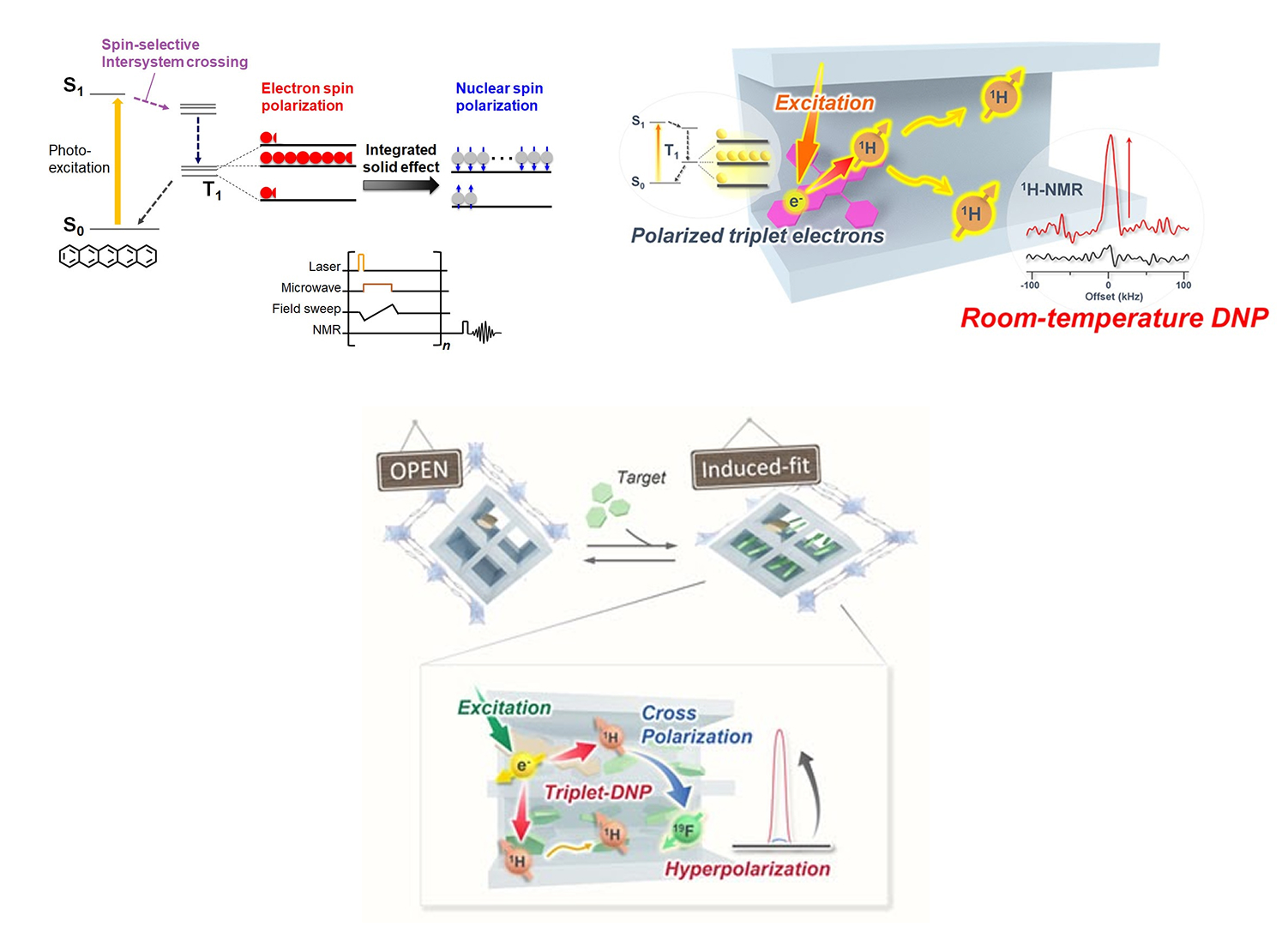
NMR and MRI are essential measurement techniques in modern chemistry, biology, and medicine, but they have the fatal flaw of being extremely insensitive. Therefore, with MRI, only water, which is abundant in living organisms, can be observed, and with NMR, proteins in cells are difficult to observe due to their low concentration. One of the methods to increase the sensitivity of MRI and NMR at room temperature is triplet-DNP (DNP: dynamic nuclear polarization), which utilizes the photo-excited triplet of molecules.
However, this triplet-DNP has been studied mainly in the field of quantum physics using single crystals, and its application to biology has been difficult. Therefore, we have developed nanomaterials that can transfer polarization to biomolecules and original polarizing agents that can be directly dispersed in water and biomolecules through our unique approach of combining the quantum physics of triplet-DNPs and materials chemistry.
Our goal is to realize innovations by creating ultra-sensitive MRI and NMR.
1. Introduction of material chemistry: use of nanomaterials with large surface area
Conventional triplet-DNP research has used dense organic crystals, but it is difficult to achieve hyperpolarize biomolecules because the target biomolecules to be polarized cannot be introduced into the crystals. As materials chemists, we have introduced nanomaterials with large specific surface area into the field of triplet-DNP. We have succeeded in triplet-DNP of metal-organic frameworks (MOFs) and nanocrystals for the first time, and are challenging to achieve high nuclear polarization of biomolecules and water continuously at room temperature.

【Recent examples】
Triplet-DNP of MOF:J. Am. Chem. Soc. 2018, 140, 15606-15610.
guest drugs in MOFs:Angew. Chem. Int. Ed. 2022, 61, e202115792.
Triplet-DNP of water:J. Am. Chem. Soc. 2022, 144, 18023-18029.
2. Original polarizing agnets: enabling high sensitivity for biomolecules and water
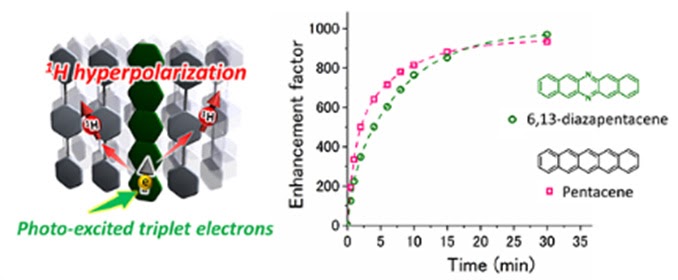
In conventional triplet-DNP, only commercially available pentacene has been used as a polarizating agnet, but pentacene is unstable in air and almost insoluble in any solvents. As chemists, we have been developing non-pentacene polarizing agents. We were the first to develop a polarizing agent that is stable in air by adding an electron-withdrawing nitrogen atom, and we were the first to synthesize a water-soluble polarizing agnet and to successfully achieve triplet-DNP of ice. We also succeeded for the first time in triplet-DNP of biomolecules by using a porphyrin derivative as a biocompatible polarizing agent.

【Recent examples】
Air-stale polarizing agent:J. Phys. Chem. Lett. 2019, 10, 2208-2213.
Water-soluble polarizing agent:Chem. Commun. 2020, 56, 3717-3720.
Triplet-DNP of biomolecules:J. Phys. Chem. Lett. 2021, 12, 2645-2650.
Quintet-DNP:Nature Commun. 2023, 14, 1056.
Triplet-DNP of cancer MRI probe, pyruvate:Chem. Sci., 2023, 14, 13842-13850.
Orientation-independent triplet-DNP polarizing agents:Proc. Natl. Acad. Sci. U.S.A., 2023, 120, e2307926120.
Talks about triplet-DNP
Triplet Dynamic Nuclear Polarization | Prof. Nobuhiro Yanai | Session 66
https://www.youtube.com/watch?v=naHEyQUiHeY
Nobuhiro Yanai – Material chemistry of triplet-DNP
https://www.youtube.com/watch?v=KR9pyShQq7c
Cover pictures for dynamic nuclear polarization


Photon upconversion
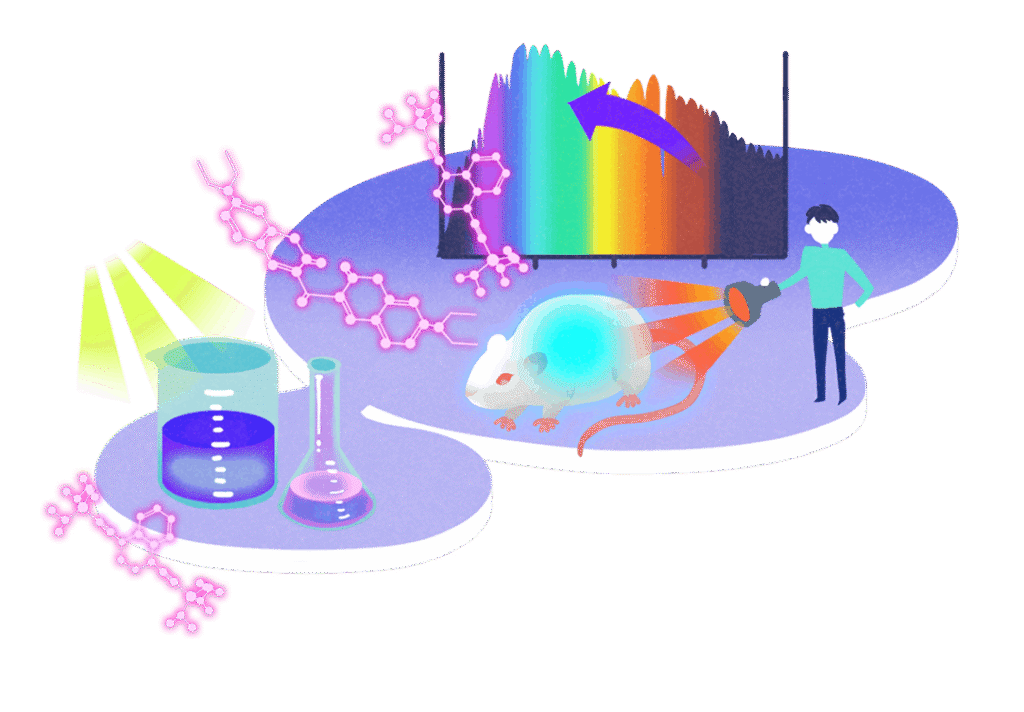
Photon upconversion is a wavelength conversion technology that converts long wavelength low-energy light into shorter wavelength higher-energy light. By utilizing the photoexcited triplet with long lifetime, it is possible to upconvert weak intensity light such as sunlight with high efficiency. This is difficult to achieve by other methods and is a unique function of molecular materials
We started research on photon upconversion in 2012, and we have been working on the following two directions. We will continue to develop innovative and practical materials toward our goal of “a world where photon upconversion is all around us”.
1. proposal of a new mechanism: from molecular diffusion to energy migration
Conventional photon upconversion research has mainly used molecular diffusion in solution, which requires volatile organic solvents, strict deoxygenation, and limited diffusion in the solid state. We have proposed a change of concept from molecular diffusion to energy migration and have demonstrated the concept in a variety of molecular assemblies such as non-volatile liquids, ionic liquids, gels, supramolecular assemblies, glasses, and crystals.


【Recent Examples】
Bicontinuous porous monolith:Chem. Sci., 2024, 15, 11500 – 11506.
Epoxy resin:ACS Appl. Mater. Interfaces 2022, 14, 22771–22780.
Gelatin gel:J. Am. Chem. Soc. 2018, 140, 10848-10855.
Crystalline film:J. Am. Chem. Soc. 2018, 140, 8788-8796.
Aqueous supramolecules:Chem. Sci, 2016, 7, 5224-5229.
Inoic liquid:Angew. Chem. Int. Ed., 2015, 54, 11550-11554.
Supramolecular gel:J. Am. Chem. Soc., 2015, 137, 1887-1894.
Non-volatile liquid:J. Am. Chem. Soc., 2013,135, 19056-19059.
2. making the impossible possible with new molecules: near-infrared to visible and visible to ultraviolet conversion
Near-infrared-to-visible upconversion is strongly required for renewable energy generation such as solar cells and photocatalysts, and for photobiological applications such as optogenetics and photodynamic therapy. Visible-to-UV upconversion is also expected to be used for artificial photosynthesis, environmental purification, and antibacterial and antiviral applications.
We have succeeded in efficiently upconverting near-infrared light to visible light using only molecules, based on our original idea of using S-T absorption. We also reported the first optogenetics using molecular upconversion.
Recently, we have been focusing on the development of visible-to-ultraviolet upconversion chromophores, and have succeeded in developing new molecules that can function under sunlight and indoor light.


【Recent examples】
S-T absorption for NIR-to-vis upconversion:J. Am. Chem. Soc.,2016, 138, 8702-8705.
NIR-to-blue upconversion:J. Mater. Chem. C. 2017, 5, 5063-5067.
NIR-to-violet upconversion:Chem. Commun. 2020, 56, 7017-7020.
Molecular optogenetics:Angew. Chem. Int. Ed. 2019, 58, 17827-17833.
Vis-to-UV upconversion:Angew. Chem. Int. Ed. 2020, 60, 142-147.
Heavy metal-free vis-to-UV upconversion:J. Mater. Chem. C 2022, 10, 4558.
Talks about photon upconversion
APC2021 Nobuhiro Yanai
https://www.youtube.com/watch?v=naHEyQUiHeY
Control of Exciton Dynamics for Efficient Photon Upconversion in Solid Materialshttps://www.youtube.com/watch?v=kNH4C9O4Bv4&t=4s
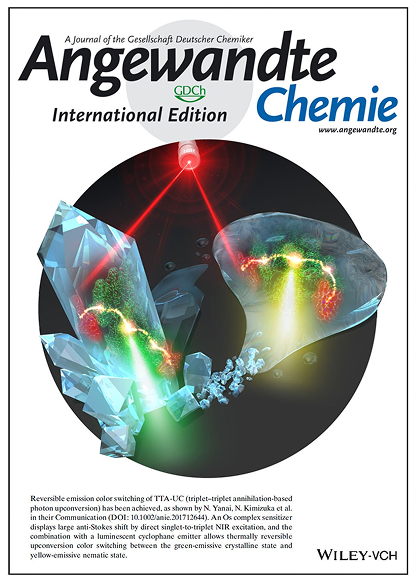
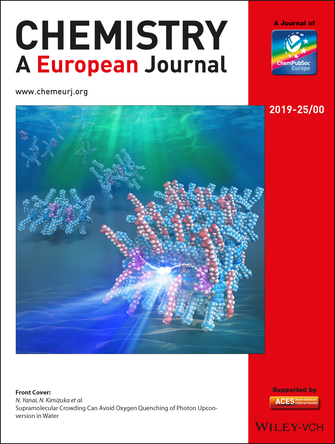
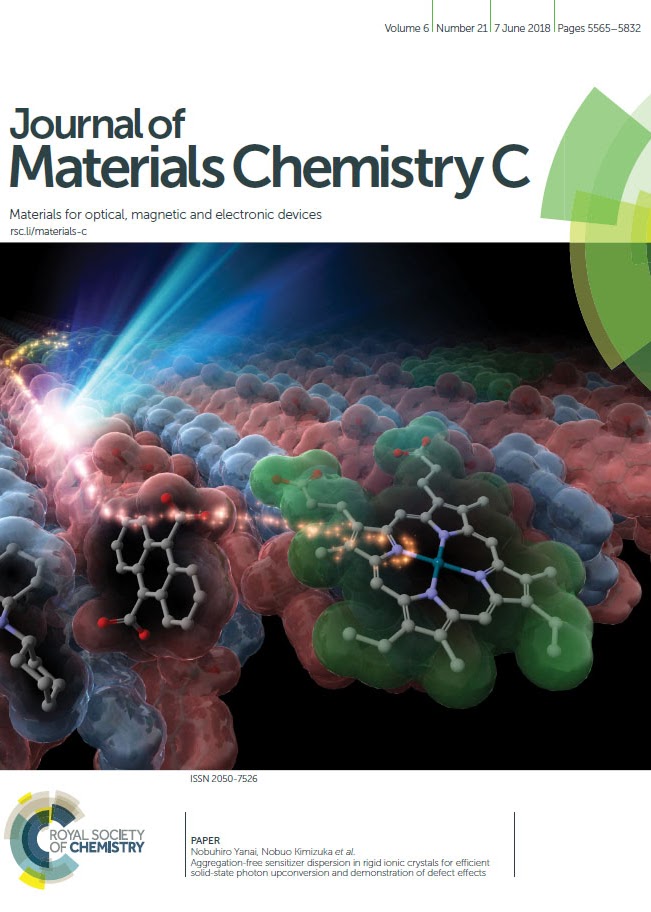
Cover pictures for photon upconversion